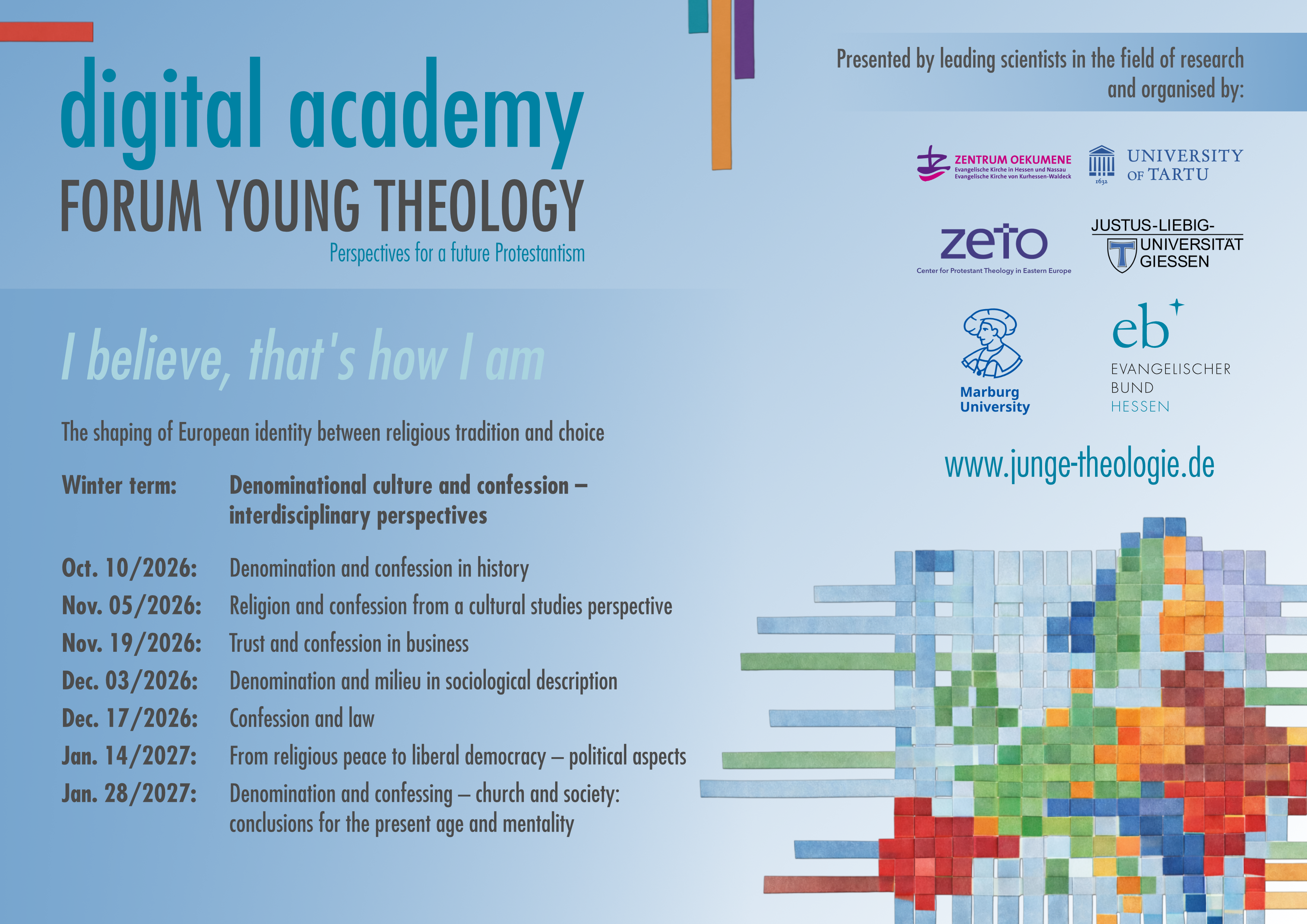
NEW Digital Academy 2026/27

A new and exciting series of events as part of the Forum Young Theology in Europe – be part of it!

I believe, that’s how I am

Part 1 (seven interactive lectures during winter term 2026/27):

Denominational culture and confession – interdisciplinary perspectives
To confess is neither a Protestant invention nor strictly limited to the religious sphere. Since the age of the Reformation confession, however, has become a prominent marker of religious and ecclesiastical self-conception (denomination). Moreover, historical, theological and sociological studies have recently shown the interdependency between religious beliefs and social context. The term “denominational culture” therefore is a summary title for this complex interrelationship. 

The first part of the project is dedicated to the examination of this interdependency, taking into account cultural studies, sociological, political science, legal and, of course, theological perspectives. An additional aspect may be the contribution that the experience of multi-denominational religiosity makes to the development of multi-religious and multicultural societies. This also raises the question of what ‘integration’ means under these circumstances.

The seven interactive lectures are delivered by leading scholars in this field and are organized by:
Zentrum Oekumene, Frankfurt/M.
University of Tartu
ZETO, Sibiu
Justus-Liebig-Universität Giessen
Marburg University
Evangelischer Bund Hessen (Protestant League Hesse)

Welcome — be part of an exciting exploration!
Students from the universities listed above should register with their professor as part of the relevant course. All other interested parties should contact:
hessen@evangelischer-bund.de.
We look forward to receive your registration or answer your questions.
Enhancing Participation in the Congregation

Taking advantage of our skills: what protestants are good at

The protestant churches have a strong exegetical tradition. Ministers are almost always required to learn biblical languages as part of their formation and they are trained to read and explain difficult texts. The skills should be implemented in the everyday life of the congregation as a possibility for the interested, not only for church members but open to everyone.

This could mean:

Continue reading “Enhancing Participation in the Congregation”

Apply now for the second conference in Sibiu

The second conference will take place in Sibiu, also known under its German name Hermannstadt, in Romania from 12 to 15 April 2023. The theme is:
Taking responsibility – giving hope – being visible

At this conference, we want to discuss where Protestant influences manifest themselves in our European societies and where Protestantism becomes visible. We will examine these issues with reference to a range of religious-sociological and ecclesiological approaches. At the same time, we shall also consider the point at which Protestantism can and should assume responsibility and what rays of hope it can offer to society. The conference thus aims to reveal the binding points of Protestantism in Europe.
You will be accommodated in the Protestant Academy of Sibiu in a single room. Travel expenses incurred will be reimbursed upon request.
apply now


Second Digital Academy on 3 November

Protestantism and Participation is the topic of the second part of the Forum Young Theology in Europe. It will start with a Digital Academy on 3 November 2022 with seven lectures every two weeks from 6 to 8 pm, followed by a conference in presence from 12-15 April 2023 in Sibiu, Romania. There the findings of the lectures will be deepened and specific output for the practice in school, parish, and civil society debates will be developed.

Continue reading “Second Digital Academy on 3 November”

Application for the Vienna conference open

The Forum Young Theology in Europe is starting the second part of it´s activites. Interested parties can apply for the conference, which takes place in Vienna on 11th to 14th May 2022 until 25 February. The conference will reflect on and deepen the findings of the lecture topics and produce concrete output for practice in school, parish and civil society debates. There, the results of the digital evening lectures on the topic „Protestantism between nationalism and cosmopolitanism“ will be deepened and bundled.

The national identifying and the love of Christ

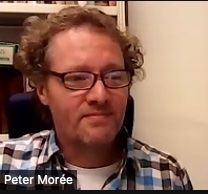
Peter Morée, church historian from Prague, gave a lecture on the challenging topic „Protestant Churches under the Influence of Nationalism“ at the Digital Academy on December 2, 2021. In two hours, more than 20 participants experienced theoretical impulses that gained concrete form through examples from art and architecture. In small groups, the participants from numerous European countries had several opportunities for direct exchange. The moderator of the evening was Oliver Engelhardt (CPCE).

Identity as a Christian community

The theme of the 2nd lecture on 18 November was identity as a Christian community, which is not always constructed in the same way. It contains not only confessional, but also regional, social and historical elements. A look at ecumenism, in the Protestant-Orthodox comparison, shows us the different approaches to national and global identity, which are sometimes congruent, sometimes divergent. The speakers were Prof. Dr Stefan Tobler (ZETO, Sibiu) and Katerina Pekridou (CEC Brussels).

First lecture launched

“What I am dreaming of are groups like this, that develop an understanding of the different ethical traditions in Europe” said Lukas David Meyer about the 1st lecture of the Digital Academy of Young Theology, with which the virtual conference on Protestantism between Nationalism and Cosmopolitanism was launched on 4 November. Meyer teaches at the Ludwig-Maximilians-University, Munich (LMU). 32 participants from 9 European countries as well as Chile discussed on the screens about Church and Identity with the theological and sociological Aspects.

Protestantism between Nationalism and Cosmopolitinanism

Many Protestant churches are currently experiencing changes that deeply affect their self-understanding, social status and internal structure.
Public discourses in Europe are shaped more and more by nationalist positions. This has an impact not only political debates of the respective societies; it also challenges the
Protestant churches as agents in these societies. On the one hand, Protestant churches are rooted within their own historically and culturally moulded narratives. On the other hand, as Protestants they are part of a strong tradition (European Protestantism) and of worldwide Christianity. Which challenges arise for Protestant churches facing strengthening nationalisms? What signifi cance do they attribute to their own national anchorage concerning their Protestant identity?

Translate »